Paper flower walls rely on layered petals, soft shadows, and carefully controlled contrast. The wrong lamp can flatten every detail or create harsh hotspots across delicate surfaces. So, what lighting works best for highlighting paper flower walls? In most installations, adjustable LED spotlights, narrow-beam wash lights, and diffused uplighting provide the strongest balance. LED technology also supports lower heat output and precise dimming, which helps protect paper materials during long events.
The U.S. Department of Energy’s Solid-State Lighting R&D Opportunities report highlights LED efficiency, controllability, and improved optical performance as major industry advantages. These qualities matter when a flower wall needs consistent brightness across uneven textures. The Illuminating Engineering Society’s TM-30 method also encourages evaluating color fidelity beyond basic CRI measurements. For pink, ivory, and pale blue flowers, a high-quality source with strong color rendering can preserve subtle differences between petals. Color matters.
In practice, begin with a 3000K to 4000K LED source, then adjust based on the venue’s ambient lighting. A 3000K setting creates warmer wedding photographs, while 4000K can keep white flowers cleaner under neutral interiors. Place fixtures 1 to 2 meters away when possible, aiming across the wall rather than directly at it. This grazing angle reveals folds and creates depth. Test before mounting.
A common mistake is choosing brightness before checking shadows. More light does not always mean better detail. Previous installations and manufacturer guidance both suggest testing the actual paper, fabric, and camera exposure together. No setup is universally perfect. This guide examines beam angles, color temperature, diffusion, dimming, and placement for more reliable 2026 paper flower wall results.
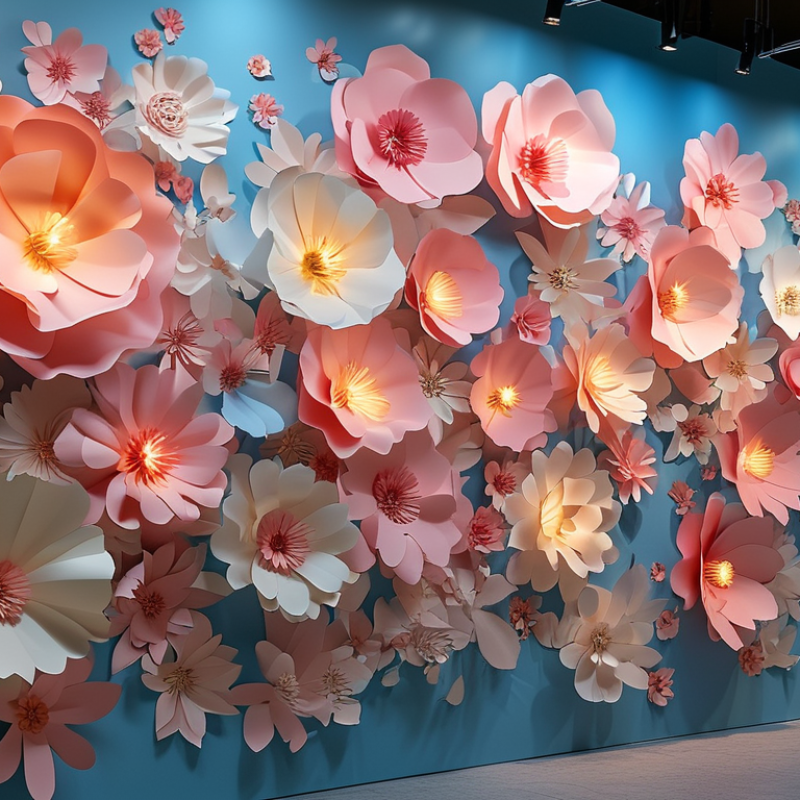
Types of Lighting for Paper Flower Walls in 2026
Types of Lighting for Paper Flower Walls in 2026
Paper flower walls need soft, controlled light rather than overwhelming brightness. Warm-white LED lighting, around 2700K to 3000K, creates gentle shadows and makes ivory, peach, and blush petals look natural. Neutral-white lighting, around 3500K to 4000K, works better for white flowers and professional photography. Colored RGB lighting can add depth, but saturated blue or green may distort skin tones and petal details.
The U.S. Department of Energy reports that LEDs use up to 75% less energy and can last 25 times longer than incandescent bulbs. Their lower heat output also reduces risk near paper decorations, although fixtures still need ventilation. Backlighting can produce a halo behind the wall, while small pin lights highlight individual blooms. String lights offer texture, but exposed points may create distracting hotspots. The Illuminating Engineering Society emphasizes visual comfort, glare control, and color quality in lighting design. Those details matter here. I have found that a dimmer often improves the result more than adding extra fixtures.
Tips: Test the lighting with the actual paper colors. Keep light sources 30–60 centimeters from the flowers when possible. Use diffusion material for harsh spots. Avoid placing hot fixtures directly against paper. A slightly uneven shadow is acceptable; perfect lighting can look strangely flat.
How to Match Light Color and Brightness with Paper Flowers
2026 Best Lighting for Paper Flower Walls?
How to Match Light Color and Brightness with Paper Flowers
Paper flowers reveal their best texture under soft, controlled light. Warm white light, around 2700K to 3000K, suits ivory, blush, peach, and cream petals. It creates a gentle, candlelike mood. Bright colors often look cleaner under neutral light between 3500K and 4000K. Very cool light can make red petals appear harsh and blue flowers look dull.
Brightness matters as much as color. For most indoor walls, aim for roughly 200 to 500 lux on the flowers. A dimmable light helps you adjust the display after installation. Start low. Raise the output until petal layers remain visible without losing delicate shadows. Place lights about 30 to 45 degrees from the wall. This angle adds depth and reduces flat, gray areas. Diffusion is useful near glossy paper.
Use lights with a high color-rendering score, ideally 90 or above. Then photograph a small test section before decorating the full wall. Phone cameras can exaggerate warmth, so check the flowers in person too. I once used bright cool light on pale pink flowers, and the petals looked nearly white. The mistake was obvious later. A second test would have prevented it. Uneven spacing can also create dark bands. Move the fixtures, not the flowers, when possible. Small changes matter.
2026 Best Lighting for Paper Flower Walls? - How to Match Light Color and Brightness with Paper Flowers
| Paper Flower Color / Style |
Recommended Light Color |
Suggested Color Temperature |
Recommended Illuminance at Flower Surface |
Color Rendering Target |
Lighting Guidance |
| White and ivory flowers |
Soft warm white |
2700–3200 K |
150–300 lux |
CRI 90 or higher |
Creates a gentle romantic appearance. Keep intensity moderate to reduce glare and prevent white paper from appearing flat or overexposed. |
| Blush, dusty pink, and peach |
Warm white or neutral white |
3000–3500 K |
200–400 lux |
CRI 90 or higher |
Supports soft pink tones without making them look orange. Use diffused light for smooth gradients across layered petals. |
| Red, burgundy, and coral |
Neutral white |
3500–4000 K |
250–500 lux |
CRI 90 or higher; strong red rendering preferred |
Neutral light helps preserve red detail. Avoid excessive brightness, which can make saturated colors look harsh or visually compressed. |
| Yellow, gold, and mustard |
Neutral white with limited warmth |
3500–4200 K |
250–450 lux |
CRI 90 or higher |
A slightly neutral source prevents yellow paper from becoming overly amber while retaining a warm decorative mood. |
| Blue, lavender, and cool purple |
Neutral to cool white |
4000–5000 K |
250–500 lux |
CRI 90 or higher |
Cooler light maintains blue and lavender clarity. Check the result in person because some violet paper can shift noticeably under different light sources. |
| Green and foliage-heavy arrangements |
Neutral white |
3500–4500 K |
250–500 lux |
CRI 90 or higher |
Neutral illumination generally keeps green foliage balanced. Add side lighting to reveal leaf texture and petal depth. |
| Mixed-color flower walls |
Neutral white |
3500–4000 K |
250–450 lux |
CRI 90 or higher |
The most adaptable setting for varied colors. Use dimming to balance light and dark petals rather than increasing output for the entire wall. |
| Large flowers with deep layered petals |
Warm-neutral or neutral white |
3200–4000 K |
300–600 lux |
CRI 90 or higher |
Use a combination of front and side illumination to reveal depth. Avoid placing a bright source directly behind delicate paper petals. |
| Fine, pale, or translucent paper petals |
Soft diffused warm-neutral white |
3000–3800 K |
100–250 lux |
CRI 90 or higher |
Lower output protects delicate visual detail and minimizes hot spots. A diffuser or bounced light source is preferable to a bare point source. |
| Photo and event backdrop |
Neutral white with adjustable dimming |
3500–4500 K |
200–400 lux on the wall |
CRI 90 or higher; flicker-controlled lighting preferred |
Choose even, shadow-controlled illumination. Keep the wall slightly less bright than the subject’s face to avoid distracting highlights in photographs. |
Practical setup note:
Use dimmable LED fixtures with diffusers, place light sources at an angle to reveal petal layers, and test the display under the actual venue lighting before installation. Illuminance values are starting ranges; the ideal level depends on wall size, paper reflectance, viewing distance, camera exposure, and ambient light.
Safety Standards for Using Lighting with Paper Decorations
2026 Best Lighting for Paper Flower Walls?
Paper flower walls can look soft and luminous, but paper remains a combustible decoration. Paper ignites quickly. Safe lighting begins with low-heat LED fixtures designed for indoor decorative use. Choose equipment carrying a recognized electrical safety mark for your region. Check the product instructions before installation.
Keep every lamp, bulb, and cable away from petals and backing materials. A practical clearance of at least 15 centimeters is helpful, but local fire codes and venue rules may require more. Never let paper cover a light, ventilation opening, plug, or power adapter. Inspect cords for cuts, loose connections, or crushed sections. Replace damaged parts instead of taping them temporarily.
Test the completed wall for at least 30 minutes before guests arrive. Touch the nearby support surface carefully; it should not feel hot. Keep plugs dry and route cables away from walkways. Use a timer or switch that is easy to reach. Turn the lights off when the space is unattended. No open flames. Not even for photographs.
I once underestimated how tightly a cable sat behind a decoration, and that small detail deserved another inspection. Safety checks can feel repetitive. They are still necessary. Keep an unobstructed path to exits, and ask the venue manager to review the setup before the event.
Smart Lighting Features for Customizable Flower Wall Displays
2026 Best Lighting for Paper Flower Walls
Smart lighting can make a paper flower wall feel gentle, dramatic, or almost garden-like. In my event setups, tunable white light has been the most useful feature. It shifts from warm evening glow to clean daylight without changing the fixture. Dimming control also protects delicate petals from harsh highlights. Paper textures look better when shadows remain soft.
Choose low-heat LED fixtures with adjustable brightness and a high color-rendering rating. Wireless control allows quick scene changes during photos, speeches, or evening service. Motion sensors can brighten a display when guests approach, though they may react too often in crowded rooms. Scheduling is practical for installations that operate for several hours. Always check cable placement, ventilation, and local electrical requirements.
Tips: Test the wall at its final height. A light that looks balanced on the floor may create deep shadows above eye level. Use side lighting for petal depth and front lighting for clear color. Avoid placing warm fixtures against pale paper; yellow tones can become stronger than expected. I once overlit a white flower wall, and it looked flat in photographs. The lesson was simple: more brightness is not always more impact. Leave room for adjustment.
Conclusion
In 2026, the best lighting for paper flower walls will depend on the display’s size, flower colors, venue, and desired mood. What lighting works best for highlighting paper flower walls? Soft LED strips, compact spotlights, and adjustable wash lights are practical choices because they create even illumination without producing excessive heat. Warm white light can enhance cream, peach, and red flowers, while neutral or cool white light may make blue, green, and pastel arrangements appear cleaner. Adjustable brightness helps prevent delicate paper details from looking washed out or too shadowed.
Installation should begin by planning the light positions, securing cables behind the wall, and testing the effect before completing the arrangement. Lights should remain separated from paper surfaces when possible, with low-heat equipment, protected connections, and appropriate safety-rated components used throughout. Smart controls can add convenience by allowing users to adjust color, brightness, timing, and gentle scene changes for different events. A balanced setup should improve the flowers’ texture and depth while keeping the display safe, comfortable, and visually appealing.

 Arden Decor