After an exhibition, large paper flowers need more than a quick return to the storeroom. Their wide petals collect dust, their stems bend easily, and damp air can soften delicate edges. The practical question is simple: “How to store large paper flowers after an exhibition?” The answer begins with inspection, gentle cleaning, and controlled support.
Paper-flower artist and author Tiffanie Turner offers a useful principle: “Treat paper flowers as art, not as packing material.” That mindset changes every storage decision. Photograph each arrangement before dismantling it. Record its original shape, position, and fragile details. Remove dust with a soft artist’s brush, not a wet cloth. Never force folded petals back into place.
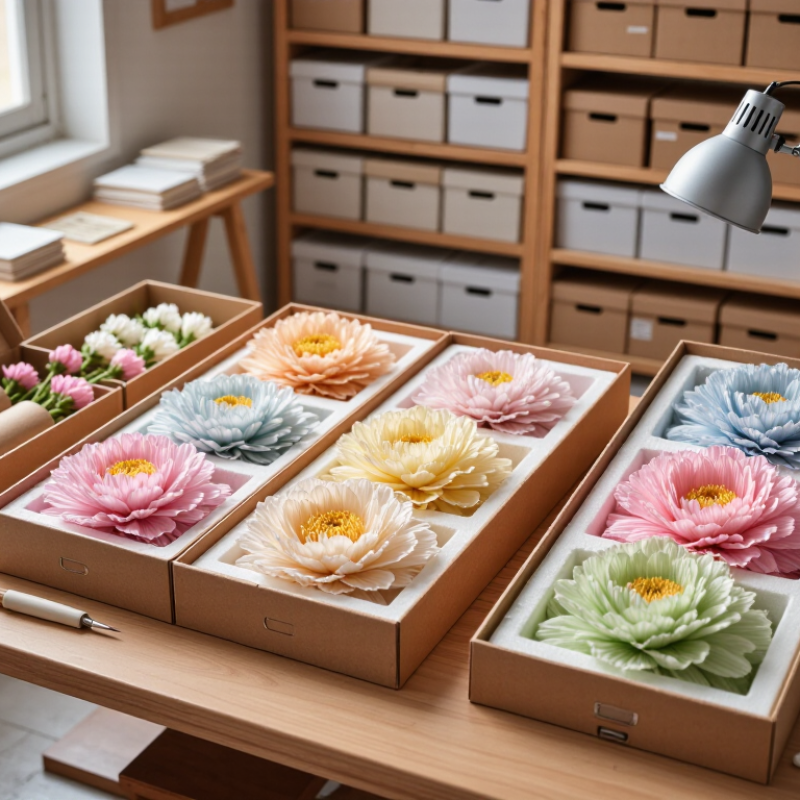
Use acid-free tissue between overlapping petals. Support large blooms with clean, lightweight padding. Store each flower in a rigid, shallow box with enough headroom. Do not compress the edges. For tall stems, use a long container or a custom cardboard sleeve. Ordinary plastic bags may trap condensation. A dry, stable room is safer, ideally away from sunlight, heaters, and exterior walls.
Check the flowers again after one week. Look for warped petals, fading, insects, or loose adhesive. Small labels can prevent future confusion. No storage plan is perfect. Oversized blooms may still shift, especially during transport. A trial box can reveal problems before the entire collection is packed. That extra test feels slow, but it protects hours of careful craftsmanship. Proper storage preserves not only the paper, but also the exhibition’s visual story.
Assess the Condition of Each Large Paper Flower
Assess the Condition of Each Large Paper Flower
Before storing large paper flowers, inspect every bloom under bright, even light. Look for crushed petals, loose layers, torn edges, fading, and water marks. Check the stem, wire support, and base for bending or instability. A flower may look attractive from a distance but hide serious damage inside its folds.
Handle each piece with clean, dry hands. Remove loose dust with a soft brush, using gentle strokes from the center outward. Do not rub stained paper or force petals back into shape. Paper fibers can split without warning.
I once repaired a curled petal too quickly and made the crease permanent. That mistake changed my process.
Photograph each flower from several angles, including damaged areas. Record its condition, approximate size, materials, and any previous repairs. A simple note such as “left petal loose” is more useful than relying on memory. Check for dampness, musty odors, insects, and adhesive failure before packing. If the paper feels cool or soft, delay storage and improve the room’s ventilation. Keep fragile flowers separate from heavy pieces, even when they appear similar. Some damage only becomes visible after weeks in a crowded container. Assess them again before long-term storage.
Remove Dust and Repair Minor Damage Before Storage
After an exhibition, dust is the first threat to large paper flowers. Fine particles settle inside folded petals and along adhesive seams. I use a soft brush and a low-suction HEPA vacuum, keeping a mesh screen between the nozzle and paper. Never drag the nozzle across the surface. Work from the center outward, and support each flower with clean, unprinted tissue.
Record damage before repairing it. Photograph crushed petals, lifted edges, stains, and loose stems under even light. The Canadian Conservation Institute’s paper-care guidance recommends documenting condition before treatment, because later changes may otherwise look accidental. For small tears, I use narrow strips of archival Japanese tissue with a compatible, reversible paste. Repairs should remain flexible. Heavy adhesive can distort thin petals.
Keep the process gentle. I once pressed a damp petal flat and created a permanent shine. That mistake changed my storage routine. I now let slightly warped pieces relax under light, breathable weights, checking them every few hours. The National Park Service Museum Handbook recommends stable conditions around 30–50% relative humidity for paper collections. Store flowers in acid-free boxes with generous clearance, never compressed together. Add soft supports beneath broad petals and label every box with its contents and condition notes. Do not wrap fragile surfaces tightly. A little space prevents surprising damage.
7 Tips for Storing Large Paper Flowers After an Exhibition
The chart shows practical planning estimates for preparing one large paper flower for storage. Remove dust and repair minor damage before packing to reduce the risk of permanent deterioration.
Use clean, dry hands and soft tools, document existing damage, allow adhesives and repairs to cure fully, avoid compression, separate fragile pieces with acid-free tissue, store the flower in a rigid breathable container, and inspect it periodically.
Choose Protective Materials and Suitable Storage Containers
After an exhibition, large paper flowers need protection from pressure, dust, light, and unstable humidity. Handle each piece with clean, dry hands, supporting the stem and flower head together. Let adhesives cure fully before packing. A rushed decision here can create permanent dents.
Choose acid-free tissue paper for direct wrapping, preferably unbleached and free from printed ink. Use soft, breathable padding around raised petals, but never force tissue into delicate folds. Avoid ordinary newspaper, dyed fabrics, and rough bubble wrap. They may transfer color, trap moisture, or leave marks. Interleaving sheets can separate flowers when several pieces share one container. Keep petals relaxed.
Select a rigid storage container with enough height and width for the largest flower. A shallow box is risky. It encourages crushing. Add a clean support board beneath each arrangement, and secure stems loosely with cotton ties. The container should close firmly, but small gaps for airflow can help prevent condensation. Store it in a cool, dark room away from radiators, windows, and damp walls. Do not place heavy boxes on top.
Check the flowers every few months for dust, soft spots, flattened petals, or fading. Humidity indicators can reveal changes that the room feels unable to show. I would not rely on one inspection method alone. Even careful packing can fail when seasonal moisture shifts suddenly. Rewrap loose areas, replace damaged tissue, and record the storage date. A simple note may prevent repeated handling.
Position and Pack the Flowers to Prevent Crushing
After an exhibition, large paper flowers need careful positioning before packing. Never place them face-down, even briefly. Their petals can crease under their own weight. Set each flower upright or slightly tilted, with soft tissue supporting the center and outer petals. Use a rigid, clean board underneath. The Canadian Conservation Institute’s paper-care guidance recommends stable relative humidity around 30–50%. The ASHRAE Handbook also identifies approximately 30–55% RH as a practical museum range. Stability matters more than chasing one perfect number.
Separate flowers with unbuffered, acid-free tissue. Avoid plastic touching painted or dyed surfaces. For tall stems, use lightweight supports rather than tight ties. A deep archival box is safer than a shallow carton. Leave enough headroom for petals to keep their shape. Do not stack heavy objects above the flowers. Large pieces often fail at the edges first. I have found that a small gap prevents surprisingly large damage.
Before sealing the container, check for dampness, dust, and crushed corners. Add a simple humidity indicator, then store the box away from windows, heaters, and exterior walls. Library preservation guidance stresses cool, stable, low-light conditions for paper materials. One detail I sometimes miss is photographing the flower’s position before packing. That image makes reassembly easier later. My packing is not always perfect; supports can shift during transport. A short inspection after twenty-four hours can reveal pressure marks before they become permanent.
Control Storage Conditions and Schedule Regular Inspections
After an exhibition, large paper flowers need controlled storage, not just a larger box. Paper absorbs moisture and releases it as conditions change. The Northeast Document Conservation Center recommends stable temperature and relative humidity for paper collections. A practical target is 18–21°C and 30–50% relative humidity. Avoid storage rooms near windows, radiators, kitchens, or exterior walls. Small fluctuations matter.
Tip 1: Measure the room. Place a calibrated thermo-hygrometer near the flowers, not beside the door. Check it weekly and record every reading. The ASHRAE Handbook recommends limiting rapid environmental changes in collection spaces. If humidity rises above 60%, paper may soften, distort, or support mold growth. Below 30%, folded edges can become brittle. These limits are useful, but not perfect for every handmade material.
Tip 2: Schedule inspections. Examine each flower monthly for curling petals, crushed centers, fading, insects, and powdery spots. Photograph damage from the same angle. Handle pieces with clean, dry hands, and support wide stems with both hands. Keep flowers separated with acid-free tissue, but do not compress the petals. I once stored a delicate centerpiece too tightly; its shape never fully recovered. That mistake still informs my packing routine. Review the records after three inspections and adjust the storage plan when evidence demands it.
FAQS
Examine every bloom under bright, even light. Check petals, folds, stems, wire supports, and bases. Look for tears, fading, water marks, loose layers, and bending. A flower can hide damage inside its folds.
Use clean, dry hands and a soft brush. Brush gently from the center outward. A low-suction vacuum may help, but place mesh between the nozzle and paper. Never drag the nozzle across the surface.
Do not rub stains or force curled petals into shape. Paper fibers can split suddenly. Not every stain lifts. Photograph the damage before attempting repairs, and use flexible, reversible materials for small tears.
Photograph each flower from several angles. Record its size, materials, repairs, and visible damage. Notes like “left petal loose” are practical. Memory is unreliable, especially after several weeks.
Use acid-free boxes with enough clearance around each flower. Add soft supports beneath broad petals. Keep fragile flowers away from heavy pieces. Leave breathing room. Do not compress the petals.
Keep storage around 18–21°C and 30–50% relative humidity. Measure conditions with a calibrated thermo-hygrometer near the flowers. Avoid windows, radiators, kitchens, and exterior walls. These ranges are useful guides, not guarantees.
Delay packing until the room has better ventilation. Check for musty odors, insects, and powdery spots. High humidity can soften paper and encourage mold growth. Do not seal a damp flower inside a box.
Inspect every flower monthly for curling, fading, crushed centers, insects, and new stains. Take photographs from the same angle. Review records after three inspections. I once packed one centerpiece too tightly, and its shape never fully recovered.
Conclusion
How to store large paper flowers after an exhibition? Begin by assessing each flower carefully, checking for bent petals, loose parts, stains, or other signs of wear. Remove dust gently with a soft brush or low-airflow method, then complete minor repairs before packing. Allow any adhesives or repaired areas to dry fully. Select clean, acid-free protective materials and storage containers that are spacious enough to support the flowers without forcing them into a smaller shape.
Position every flower with its most delicate elements protected, using tissue paper, soft padding, or dividers to prevent crushing and friction. Avoid stacking heavy objects on top, and label containers clearly for easier handling. Store the flowers in a cool, dry, dark, and stable environment away from moisture, heat, and direct sunlight. Schedule regular inspections to identify dust, pests, humidity damage, or weakened repairs early, helping preserve the flowers’ shape, color, and decorative value for future exhibitions.

 Arden Decor